
Dentures
A denture, or complete denture, is an appliance that replaces your natural teeth and supports your cheeks and lips. It’s made either once your gums have healed after extractions, or to go in immediately after the teeth come out.
- to make one: conventional or immediate
- 2 ways
- between professional relines
- 1–2 years
- exam with Dr. Bhat to check your denture
- Yearly
Replacing your teeth?
Start here.
What is a
denture?
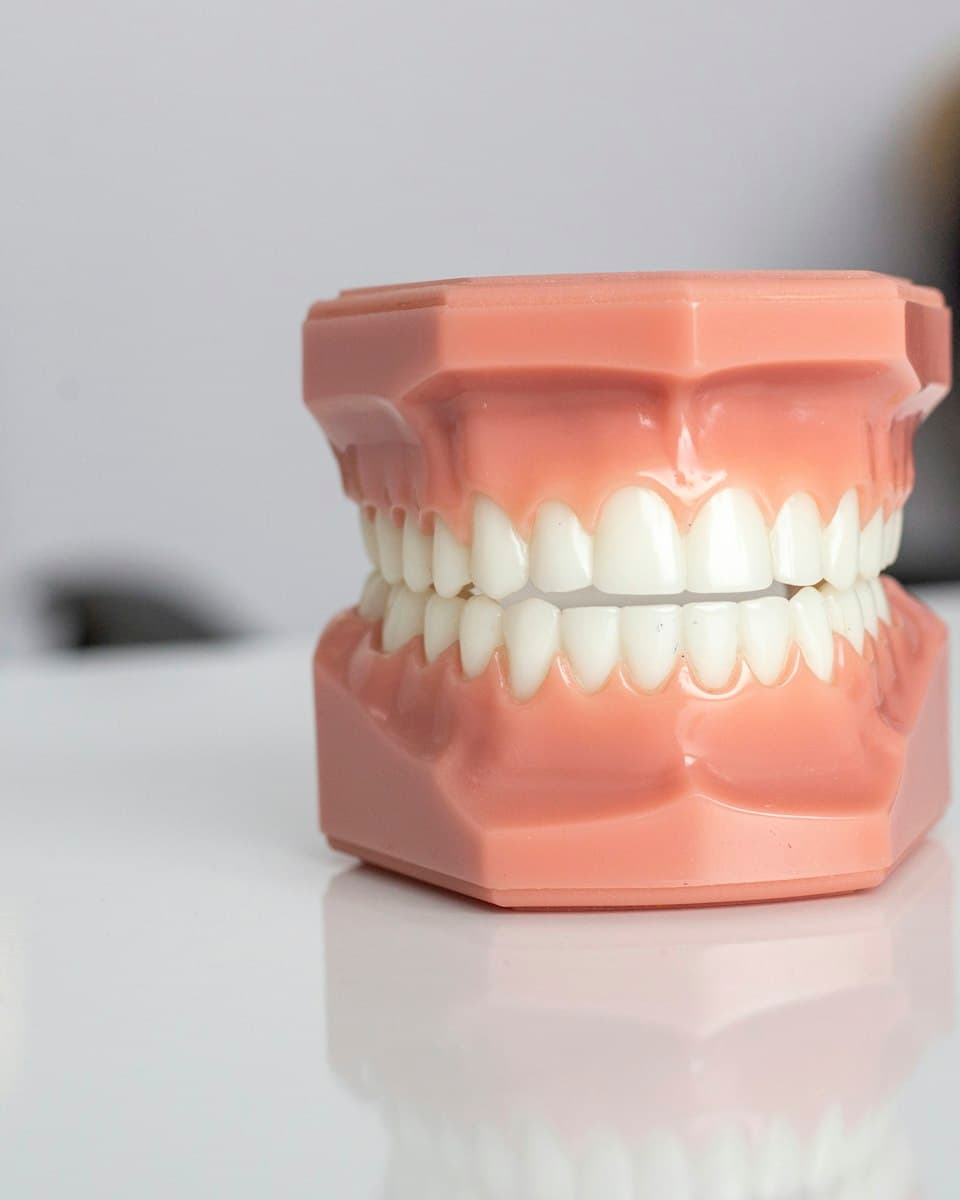
A denture, or complete denture as it’s often called, is an appliance that goes in your mouth to replace your natural teeth and support your cheeks and lips. Most are made of acrylic. An upper denture has acrylic, usually flesh colored, covering the roof of your mouth, and a lower one is shaped like a horseshoe to leave room for your tongue. The teeth are plastic, porcelain, or a combination.
There are two ways to make one. A conventional denture is made after all the teeth have been extracted and the gums have healed. An immediate denture goes in immediately after the teeth are extracted, and the gums heal under it. A denture can also be made to fit over teeth that have had root canal treatment, and a complete denture can be attached to dental implants for a more secure fit.
Over a normal course of time, dentures wear. The bone and gum ridges slowly recede after teeth are extracted, which changes your jaw alignment, so a denture needs to be relined or replaced to keep that alignment normal. Regular dental exams still matter, too, so the tissues in your mouth can be checked for disease or change.
At Sea Dental Care, Dr. Bhat can assess your denture for cracks, chips, and broken or loose teeth, and suggest solutions.
How do I clean my denture?
Brush it inside and out every day with a soft, large nylon denture brush with round-ended bristles. Use denture cream instead of toothpaste, which is too abrasive and will scratch it, and rinse with cold water.
Can my denture go in hot water?
No. Dentures warp in hot water. When you’re not wearing yours, cover it with water or a denture-cleaning solution so it doesn’t dry out.
What if my denture feels loose?
Have it checked right away. A loose denture can cause friction and pressure on your gums and the bone beneath them.
How do I know if it’s worn?
Inspect your denture regularly for worn teeth. Worn and stained dentures can make you look older and cause the denture to function poorly.
- Replaces natural teeth
- Supports cheeks and lips
- Conventional or immediate
- Can fit over root-canal-treated teeth
- More secure with implants
- Soft liners for sore gums
- Relined as your gums change
- Yearly exam with Dr. Bhat
Is a denture right for you?
A denture does more than replace your teeth. It also supports your cheeks and lips.
The practice will advise you on the option that best suits your individual needs, and if a denture you already wear doesn’t fit well, can assess it and recommend solutions.
Teeth that have to come out
If extracting your remaining teeth is unavoidable, an immediate denture may be the best solution. It goes in immediately after the extractions.
Gums that have healed
A conventional denture is made after all the teeth have been extracted and the gums have healed.
Missing only some teeth
If you still have natural teeth, a removable partial denture can replace one or more missing ones.
Trouble with a lower denture
Many people have no problem wearing an upper denture, but some find a lower one difficult to wear and eat with. Implants can hold it for a more secure fit.
Sore or flattened gums
If your gums have receded and flattened, or are chronically sore, a soft liner between the denture and your gums may bring comfort and relief.
Questions about dentures
The questions that come up once you’re wearing a denture.
Still have a question? Call 425-827-3097.
Page updated October 2026.
What happens at a denture exam?
An update of your medical and dental history, an examination of your mouth, a tissue and bone assessment, a check of your denture’s stability and bite, cleaning and polishing of the denture, and a review of your oral hygiene. Annual exams can also help detect oral abnormalities, including cancerous and pre-cancerous lesions.
What is a soft liner?
A layer of soft, pliable material fitted between your denture and your gums, where it absorbs shock between the hard base of the denture and your gums. It can go into a new denture or be added to one you already have, and it needs regular follow-up visits to check the fit.
Why does an ill-fitting denture matter?
It can cause bite problems, speech impediments, and tissue irritation, and it may cause bone and tissue changes. Left unchecked, it can lead to complicated situations in the future, so it should be corrected.
Does my health history matter?
Yes. A variety of medical and dental conditions can alter a denture’s fit, so keep your medical and dental history up to date with any significant changes, and discuss all your current medications with your doctor and dental professional.
How can I pay for a denture?
We work with you to get the most from your insurance for covered procedures. We accept Visa, MasterCard, American Express, Discover, and CareCredit, and a monthly payment plan can be arranged as long as it’s set up before the procedure.
Where to next?
View all treatments- Implant-retained denturesMissing all your lower teeth? Implants can hold a denture so it’s more stable while you chew.Read more
- Partial denturesA removable partial denture replaces one or more missing teeth, restoring a natural appearance and clearer speech.Read more
- Denture relinesAs your gums change, a denture loosens. Relining it professionally every one to two years keeps it secure.Read more