
Children’s dentistry
A child’s first regular dental visit should come just after their third birthday, and it is usually short, with very little treatment. Most of the visit is about getting your child comfortable with the dentist and showing you how to care for their teeth at home.
- the first regular visit, just after the third birthday
- Age 3
- all the baby teeth, in by about 2 1/2 years old
- 20 teeth
- of acid in the mouth after every meal or snack
- 20 min
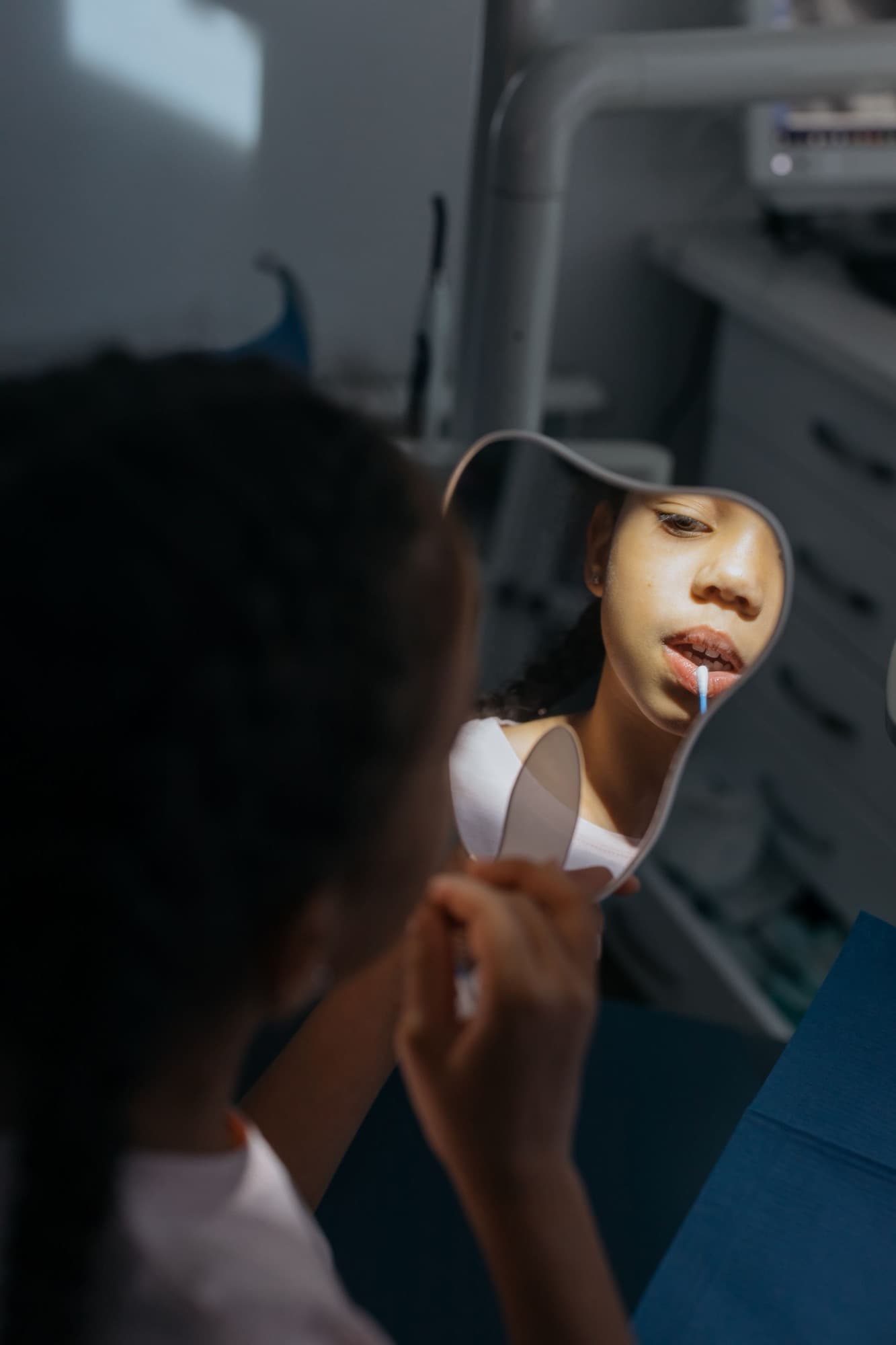
Your child’s first visit
The first regular dental visit should be just after your child’s third birthday. It is usually short and involves very little treatment. We may ask you to sit in the dental chair and hold your child during the examination, and you may also be asked to wait in the reception area for part of the visit, so that a relationship can be built between your child and the dentist.
We will gently examine your child’s teeth and gums. X-rays may be taken, to reveal decay and to check on the progress of the permanent teeth under the gums. We may clean your child’s teeth and apply topical fluoride to help protect them against decay, and we will make sure they are receiving adequate fluoride at home. Most important of all, we will review with you how to clean and care for your child’s teeth.
During the first visit, the dentist will:
- Examine your child’s mouth, teeth and gums.
- Evaluate adverse habits like thumb sucking.
- Check to see if your child needs fluoride.
- Teach you both about cleaning their teeth and gums.
- Suggest a schedule for regular dental visits.
What should I tell my child?
We are asked this many times. Prepare your child the same way you would before a first haircut or a trip to the shoe store. Their reaction to the first visit may surprise you.
- 01
Take a preview
Bring your child by for a look at the office before the appointment.
- 02
Read about it together
Read books with them about going to the dentist.
- 03
Walk through the visit
Review with them what the dentist will be doing at the first visit.
- 04
Keep it positive
Speak positively about your own dental experiences.
Patients under 18 must be accompanied by a parent or guardian. What to bring, and what the first appointment looks like for any new patient, is on our first visit page.
Your first visitPreventing cavities
Tooth decay and children no longer have to go hand in hand. Most of the time, cavities are due to a diet high in sugary foods and a lack of brushing. Limiting sugar and brushing regularly help, of course. So does speed: the longer it takes your child to chew their food, and the longer the residue stays on their teeth, the greater the chance of a cavity.
Every time your child eats, an acid reaction in the mouth lasts about 20 minutes as bacteria digest the sugars. In that time the acid can destroy tooth structure, eventually leading to cavities.
Saliva makes a difference too. Thinner saliva breaks up and washes away food more quickly, while a diet high in carbohydrates and sugars tends to produce thicker saliva, which allows more of the acid-producing bacteria that cause cavities.
Sealants
We use the latest in dental sealant technology to protect your child’s teeth. Sealants are space-age plastics bonded to the chewing surfaces of decay-prone back teeth: one of the ways we set the foundation for a lifetime of good oral health.
About dental sealantsSix habits that help
- 01
Limit the frequency of meals and snacks.
- 02
Encourage brushing, flossing and rinsing.
- 03
Watch what your child drinks.
- 04
Avoid giving your child sticky foods.
- 05
Make treats part of meals.
- 06
Choose nutritious snacks.
When teeth come in
Baby teeth arrive in a fairly predictable order from the first year on, and the first permanent teeth follow at school age. Don’t worry if some teeth are a few months early or late: all children are different.
Baby teeth matter. They hold space for the permanent teeth, and they are important to chewing, biting, speech and appearance.
For this reason it is important to keep up a healthy diet and daily hygiene from the start.
6 to 8 months
The two bottom front teeth
The first baby teeth to come into the mouth. You will notice them when your baby is about 6 to 8 months old.
Next
The four upper front teeth
They follow the bottom pair, and the rest of your baby’s teeth appear periodically after them.
Until about 2 1/2
Pairs along the sides of the jaw
The remaining teeth usually appear in pairs along the sides of the jaw until your child is about 2 1/2 years old.
About 2 1/2 years
All 20 baby teeth
At around 2 1/2 your child should have all 20 teeth.
5 to 6 years
The first permanent teeth
Between the ages of 5 and 6 the first permanent teeth begin to erupt. Some replace baby teeth and some don’t.
Questions parents ask
What parents want to know before bringing a child in for the first time.
Still have a question? Call 425-827-3097.
Page updated October 2026.
When should my child first see the dentist?
The first regular dental visit should be just after your child’s third birthday. It is usually short and involves very little treatment.
Can I stay with my child during the visit?
We may ask you to sit in the dental chair and hold your child during the examination. You may also be asked to wait in the reception area during part of the visit, so that a relationship can be built between your child and the dentist. Patients under 18 must be accompanied by a parent or guardian.
Will my child need x-rays?
X-rays may be taken, to reveal decay and to check on the progress of your child’s permanent teeth under the gums.
What should I tell my child about the first visit?
Prepare them the same way you would before a first haircut or a trip to the shoe store. Take them for a preview of the office, read books with them about going to the dentist, review what the dentist will be doing, and speak positively about your own dental experiences.
Why do children get cavities?
Most of the time cavities are due to a diet high in sugary foods and a lack of brushing. Every time someone eats, an acid reaction occurs in the mouth as bacteria digest the sugars, lasting approximately 20 minutes, and during that time the acid can destroy tooth structure. The longer food residue stays on the teeth, the greater the chance of cavities.
What are dental sealants?
Dental sealants are space-age plastics that are bonded to the chewing surfaces of decay-prone back teeth. We use the latest in dental sealant technology to protect your child’s teeth.
When do baby teeth come in?
The two bottom front teeth come in first, when your baby is about 6 to 8 months old, followed by the four upper front teeth. The rest usually appear in pairs along the sides of the jaw, and at around 2 1/2 years old your child should have all 20 teeth. Don’t worry if some are a few months early or late, as all children are different.
Do baby teeth really matter if they fall out anyway?
Yes. Baby teeth hold space for the permanent teeth, and they are important to chewing, biting, speech and appearance. Between the ages of 5 and 6 the first permanent teeth begin to erupt; some replace baby teeth and some don’t.