
Nitrous oxide
Nitrous oxide, often called laughing gas, is a sweet-smelling, colorless gas you simply breathe through your appointment. It has been dentistry’s primary means of sedation for many years: you stay awake and in control, while it takes the edge off within minutes and leaves no hangover.
- of what you breathe is oxygen
- 50 to 70%
- for its relaxing, pain-killing effect to develop
- 2 to 3 min
- or other after effect once it wears off
- No hangover
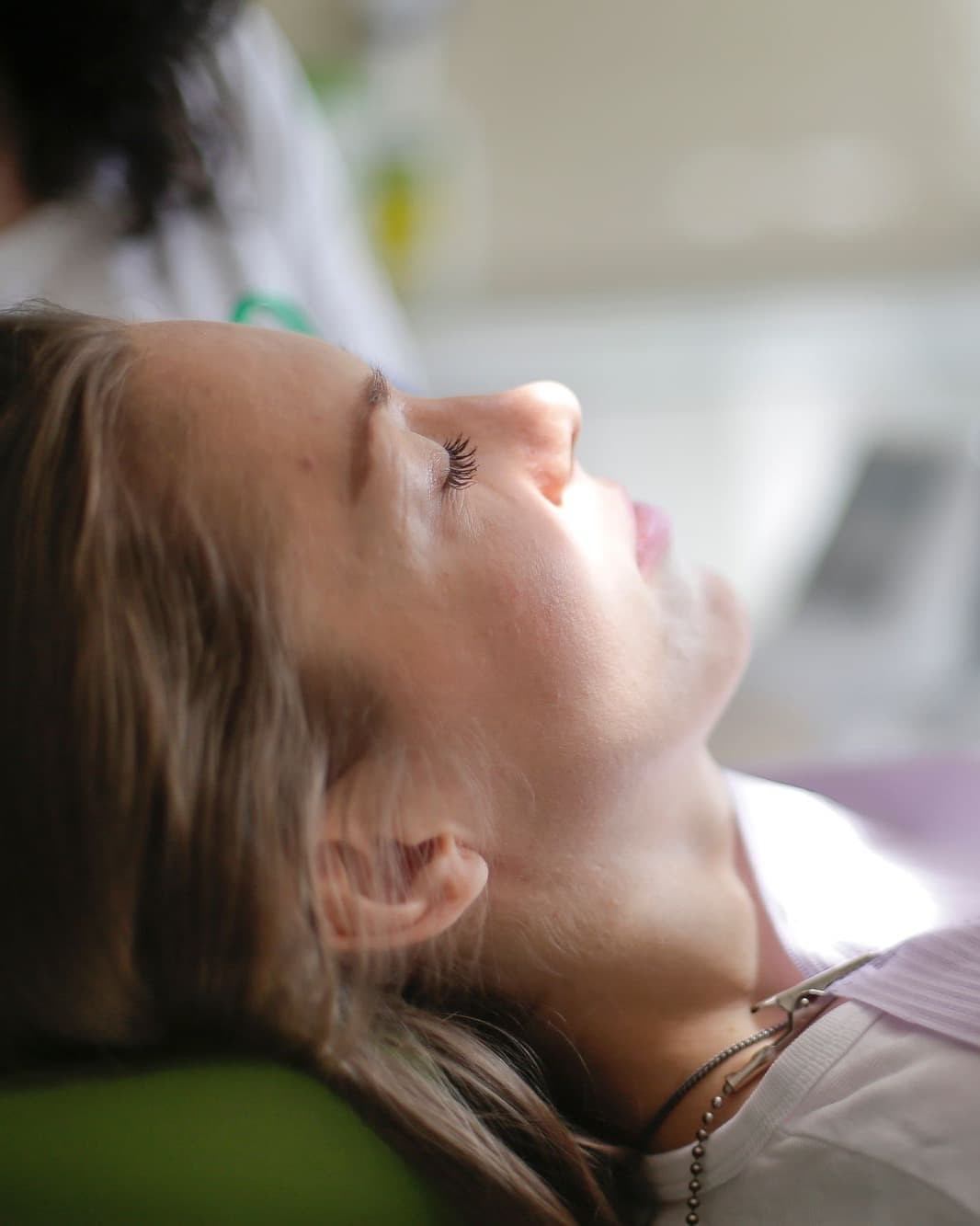
How it works
Nitrous oxide is a sweet-smelling, non-irritating, colorless gas that you simply breathe. It has been the primary means of sedation in dentistry for many years.
It is always mixed with oxygen: you receive 50 to 70 percent oxygen, with no less than 30 percent nitrous oxide. The depth of sedation can be turned up or down at any time during your appointment.
You may feel drowsy and may even fall asleep, and some patients have a mild amnesia afterward, not remembering everything that happened during their visit.
- Oxygen
- At least half of every breath, and up to 70 percent.
- Adjusted to you
- The share between can be changed at any time to deepen or lighten the sedation.
- Nitrous oxide
- Never less than 30 percent of the mix.
You breathe on your own the whole time, and you remain in control of all of your bodily functions.
Why patients choose it
- 01
Adjustable at any moment
The depth of sedation can be increased or decreased at any time during your appointment.
- 02
No hangover
There is no after effect once the gas is turned off.
- 03
Safe
Inhalation sedation has no side effects on your heart and lungs.
- 04
Less gagging
Inhalation sedation is very effective in minimizing gagging.
- 05
Fast
It reaches the brain within 20 seconds, and its relaxing and pain-killing properties develop in as little as 2 to 3 minutes.
Is it right for you?
For most patients, yes. There is one condition that rules it out, and a few where you may prefer another option.
You should not use nitrous oxide if you have been diagnosed with chronic obstructive pulmonary disease (COPD).
There are no other major contraindications, but you may not want to use it if you have:
- Emphysema
- Other chest problems
- Multiple sclerosis (M.S.)
- A cold, or any other difficulty breathing
Questions about laughing gas
What patients ask before choosing nitrous oxide for a visit.
Still have a question? Call 425-827-3097.
Page updated October 2026.
Will I be asleep?
No. You breathe on your own and remain in control of all of your bodily functions. You may feel drowsy and may fall asleep, and some patients have a mild amnesia, not remembering everything that happened during the appointment.
How quickly does it work?
Rapidly. Nitrous oxide reaches the brain within 20 seconds, and its relaxation and pain-killing properties develop in as little as 2 to 3 minutes.
Will I feel it after my appointment?
There is no after effect such as a hangover.
What if it feels like too much, or too little?
Tell us. The depth of sedation can be altered at any time to increase or decrease it.
Is it safe?
Nitrous oxide has been the primary means of sedation in dentistry for many years. You receive 50 to 70 percent oxygen with no less than 30 percent nitrous oxide, and inhalation sedation has no side effects on your heart and lungs.
Does it help with gagging?
Yes. Inhalation sedation is very effective in minimizing gagging.
Who should not use nitrous oxide?
You should not use nitrous oxide if you have been diagnosed with chronic obstructive pulmonary disease (COPD). There are no other major contraindications, but you may not want to use it if you have emphysema, other chest problems, multiple sclerosis, a cold, or other difficulties with breathing.
What if I’m not sure it’s for me?
Ask for a five minute trial, to see how you feel with this type of sedation before proceeding with treatment.