
Skip to content

Our technology

Dentistry is micro-surgery, so Dr. Bhat and her team use the latest technology to improve the precision, comfort, and fit of your care. Microscopes, digital imaging, lasers, and intraoral cameras each do a job the naked eye can’t.

the radiation exposure of film x-rays, with digital
1/6th
the exposure time of traditional radiographs
Half
needles, drilling, or numbness with laser dentistry
Often no
01

Microscopes and electric handpieces

Dentistry is micro-surgery. We use high-power microscopes, similar to the one an ophthalmologist uses, to create restorations with a precise fit and finish you can’t reach with the naked eye. The microscope also directs its light straight onto the teeth, which means less glare for you.

Many dentists use air-driven handpieces, the whining drills you may remember. They work, but none rotates perfectly smoothly. For the most precise parts of a restorative procedure we use electric handpieces instead, for a far closer fit between your tooth and its new crown, veneer, or filling.

A more precise tool means less vibration and less noise, which makes the visit more comfortable too.

02

Digital imaging

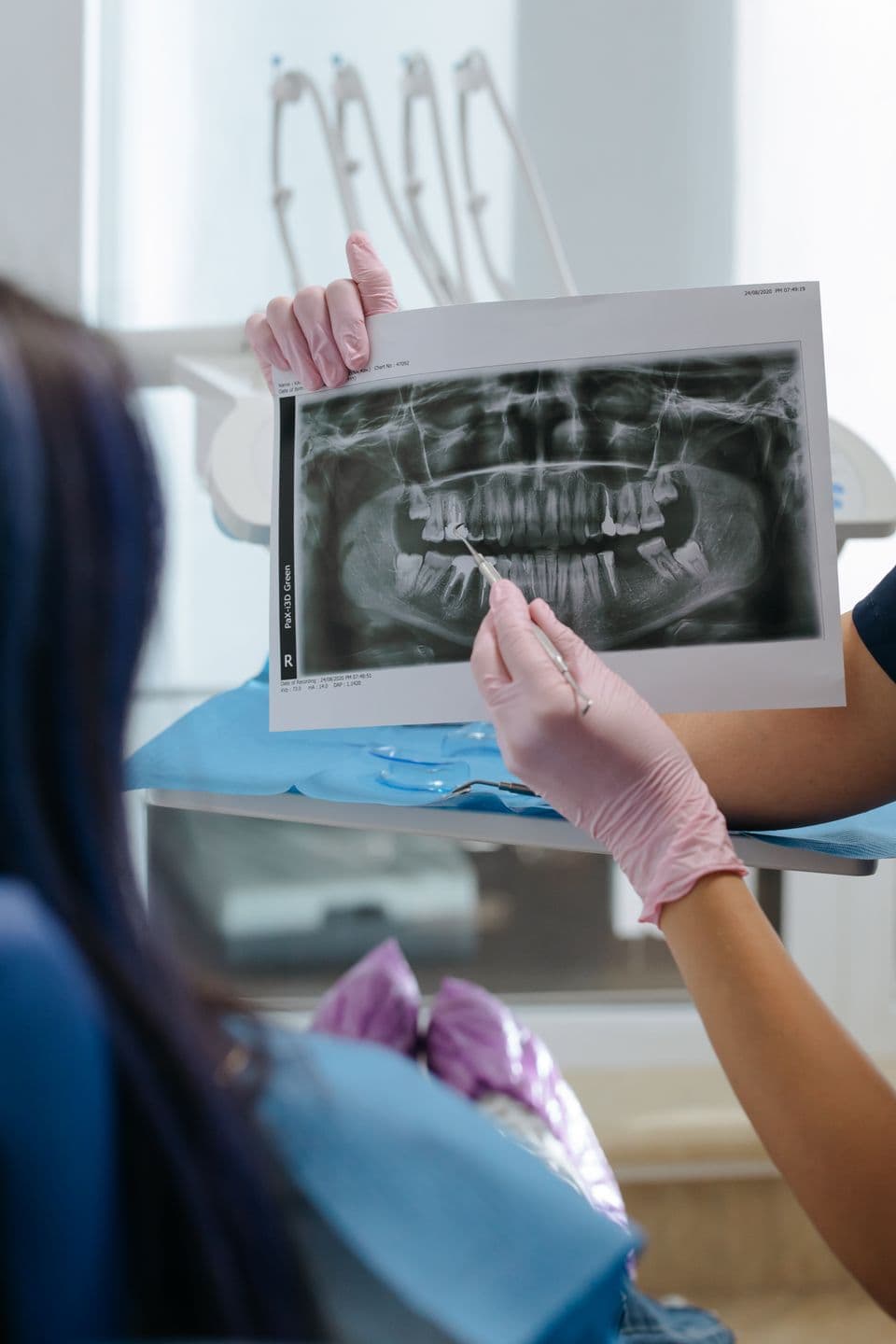
Radiographs show what we can’t see with our own eyes: cavities between teeth, bone level and bone health, the roots and nerves of teeth, lesions such as cysts, and damage after an injury. Dr. Bhat follows established guidelines on which x-rays to take and when.

Our x-rays are digital. The image appears on a monitor instead of a sheet of film held up to the light, so it can be enlarged and read closely, stored with your record, and sent quickly to a specialist or your insurance company when needed.

Digital x-rays expose you to about a sixth of the radiation of film, with roughly half the exposure time.

03

Laser dentistry

If you don’t look forward to needles, drilling, or numbness, laser dentistry may be the right choice. A laser delivers energy as light, at a wavelength chosen for its target: enamel, decay, gum tissue, or a whitening enhancer. It works on both teeth and soft tissue.

There is no heat or vibration, so most patients find it comfortable, and often no local anesthetic is needed. For soft-tissue procedures there is no suturing, and healing is much faster. Lasers can also find hidden decay early, when in some cases it can be reversed with hygiene and fluoride and may never need a filling.

Where lasers help

  • Cavity diagnosis and removal
  • Curing bonding materials
  • Teeth whitening
  • Gum (periodontal) care
  • Pediatric procedures
  • Canker sore treatment
  • Tongue-tie release, without anesthesia or sutures
  • Root canals and apicoectomies
  • Crown lengthening and other gum corrections

Dental lasers have been shown to be safe and effective for treating both children and adults.

04

Intraoral camera

An intraoral camera is a very small camera, in some cases just a few millimeters long. It gives us clear, enlarged images of your mouth, teeth, and gums, so you see details a standard mirror examination can miss, and you understand your diagnosis because you’re looking at the same picture we are.

The images are saved to your record as a permanent account of your treatment, and can be printed for you, for a specialist, or for your lab or insurance company.

Clearer images mean a faster diagnosis and less time in the chair.

Questions about our technology

X-rays, lasers, and microscopes: what patients ask before and during a visit.

Still have a question? Call 425-827-3097.

Page updated October 2026.

Are digital x-rays safe?

Exposure from dental radiographs is already very small, and digital x-rays reduce it further: about a sixth of the radiation of film, with roughly half the exposure time. Dr. Bhat also follows established guidelines on which x-rays to take and when, so none is taken without a reason.

Why do you need x-rays at all?

Radiographs show what can’t be seen by eye: cavities between teeth, the level and health of the bone, the roots and nerves of teeth, lesions such as cysts, and damage after an injury. They are invaluable for diagnosing, treating, and maintaining dental health.

Does laser dentistry hurt?

Most patients find it quite comfortable. A laser produces no heat or vibration, unlike a drill, and often no local anesthetic is needed. For soft-tissue procedures there is no suturing, and healing is much faster.

Is laser treatment suitable for children?

Yes. Dental lasers have been shown to be safe and effective for treating both children and adults, and pediatric procedures are among the areas where they help.

Why use a microscope for dental work?

Dentistry is micro-surgery. A high-power microscope, similar to the one an ophthalmologist uses, lets us create restorations with a precise fit and finish that can’t be achieved with the naked eye, and it directs light straight onto the teeth, so there is less glare for you.

Can I have copies of my images?

Yes. Digital x-rays and intraoral camera images are saved with your record, and can be printed for you or sent to a specialist, your lab, or your insurance company.

See the difference
for yourself

Call 425-827-3097

Monday to Friday, 8 AM to 5 PM
Bellevue, WA