
Dental implants
A dental implant is a small titanium post placed in the jawbone where a tooth is missing. The bone bonds with the titanium, giving Dr. Bhat a strong foundation for replacement teeth that look, feel, and function like natural teeth.
- of surgery for most patients
- 2 stages
- of healing, usually with temporary dentures
- 3–6 months
- from first surgery to finished teeth
- 6–8 months

Missing a tooth?
Start here.
What is a
dental implant?
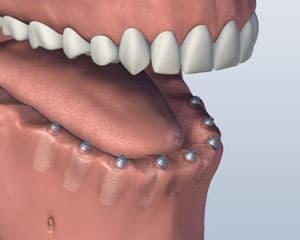
A dental implant is a substitute for a tooth’s root: a tiny titanium post, surgically placed in the jawbone where a tooth is missing. The bone bonds with the titanium, and a small post attached to the implant comes through the gum to anchor the replacement tooth.
Because it’s anchored in bone, an implant lets you eat virtually anything and smile with confidence. It also helps preserve your facial structure, preventing the bone loss that follows missing teeth. Implants can carry replacement teeth, a bridge, or a denture.
For most patients it happens in two stages. The implants are placed and left beneath the gums for three to six months while they bond with the jawbone. Then they’re uncovered, and Dr. Bhat makes your new teeth over posts or attachments connected to them.
At Sea Dental Care, your evaluation is with Dr. Bhat or an oral and maxillofacial surgeon we refer you to, and Dr. Bhat makes the teeth that go on your implants.
How long do dental implants take?
Usually six to eight months from start to finish. Most of that is healing: for the first three to six months after surgery, the implants sit beneath the gums, gradually bonding with the jawbone.
Will I have teeth while the implants heal?
You should be able to wear temporary dentures and eat a soft diet during that time. Meanwhile, your final bridgework or denture is being designed.
Do implants look natural?
They’re designed to support replacement teeth that look, feel, and function like natural teeth, so you can smile with confidence.
Will treatment disrupt my daily life?
The process takes months, but most patients don’t experience any disruption in their daily life.
- Look and feel natural
- Eat virtually anything
- Smile with confidence
- Helps prevent bone loss
- Preserves facial contours
- Strong titanium foundation
- Secure fit for dentures
- New teeth made by Dr. Bhat
Is a dental implant right for you?
An implant does more than fill a gap. It helps preserve the jawbone that deteriorates when teeth are missing.
Whether implants suit you comes down to an evaluation: a dental and x-ray examination and a review of your health history, with Dr. Bhat or an oral and maxillofacial surgeon the practice refers you to.
One or more missing teeth
An implant goes in the jawbone where a tooth is missing. One or several can carry replacement teeth, a bridge, or a denture.
A tooth that can’t be saved
If a tooth has to be extracted, Dr. Bhat will talk through how to replace it, and an implant can take its place.
A loose lower denture
Some people find a lower denture hard to wear and eat with. Two or more implants make it more stable while you chew.
Worried about bone loss
When teeth are missing, the bone that held them deteriorates. Implants help preserve it, and with it the shape of your face.
Want to eat what you like
With implants, people who have lost teeth regain the ability to eat virtually anything.
Time for a few months of healing
Implants bond with the jawbone over three to six months. You should be able to wear temporary dentures and eat a soft diet in the meantime.
Questions about dental implants
The questions that come up once you’re seriously considering an implant.
Still have a question? Call 425-827-3097.
Page updated October 2026.
What happens at the evaluation?
A dental and x-ray examination and a review of your health history. Your needs and questions are covered by Dr. Bhat or by an oral and maxillofacial surgeon the practice refers you to, and the team works closely with you from there.
What are the two stages?
First, the implants are placed in the jawbone and left beneath the gums for three to six months to bond. Then the surgeon uncovers them and attaches a small healing collar. Dr. Bhat takes an impression, connects posts or attachments to the implants, and makes your replacement teeth over them.
What is an implant made of?
Titanium. The bone bonds with the titanium, and that bond is what makes the implant a strong foundation for artificial teeth.
Can implants hold a denture in place?
Yes. A complete denture can be attached to dental implants for a more secure fit. With two implants in the lower jaw, a denture snaps on and is more stable while chewing. Four to six implants joined by a custom bar hold it more firmly still.
Why replace a missing tooth at all?
Missing teeth can affect your bite and your ability to speak and chew, and they put more load on the teeth you have left. The jawbone under a missing tooth also deteriorates, and an implant helps preserve it.
How can I pay for implants?
We work with you to get the most from your insurance for covered procedures. We accept Visa, MasterCard, American Express, Discover, and CareCredit, and a monthly payment plan can be arranged as long as it’s set up before the procedure.
Where to next?
View all treatments- Implant-retained denturesMissing all your lower or upper teeth? Implants can hold a denture so it stays stable while you eat.Read more
- BridgesA bridge fills the gap with a false tooth, supported by crowns on the natural teeth on either side.Read more
- Tooth extractionsWhen a tooth can’t be saved, Dr. Bhat will discuss the alternatives and how to replace it.Read more